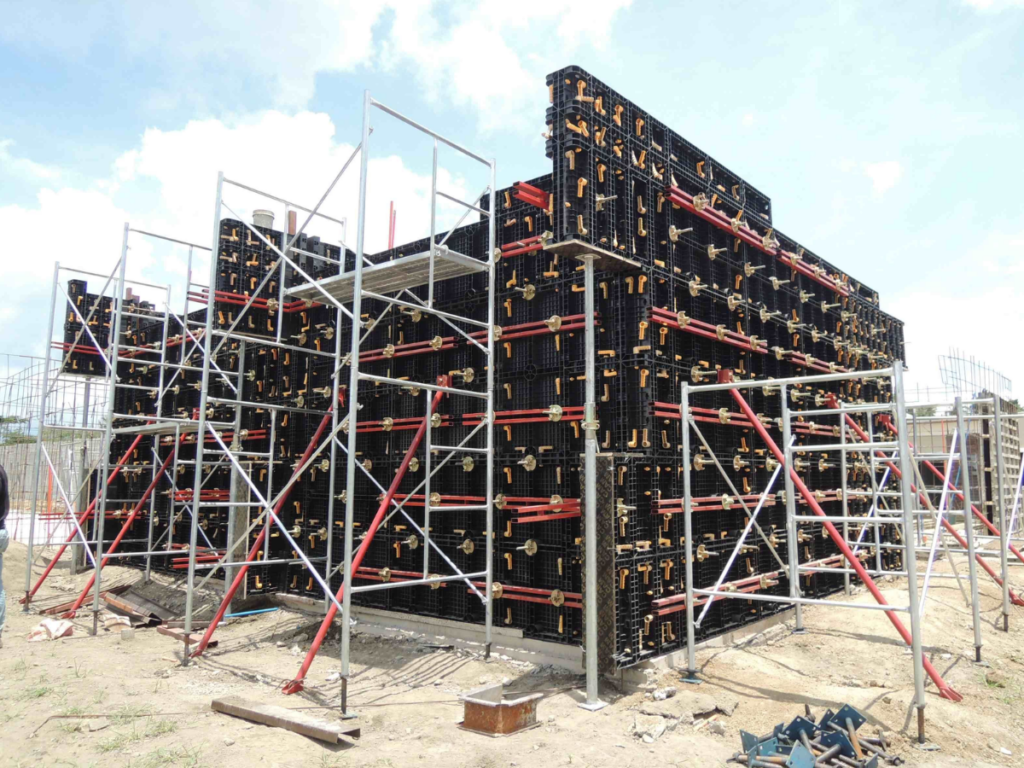
Construction formwork plays an important role in pouring concrete molds for construction works. Depending on purpose, contractors will choose different types of formwork in construction (wood, steel, plastic…). To help you better understand the uses as well as the structure, characteristics of them, Fiber Wood will present more clearly through the article below
Main content
Introduction to construction formwork
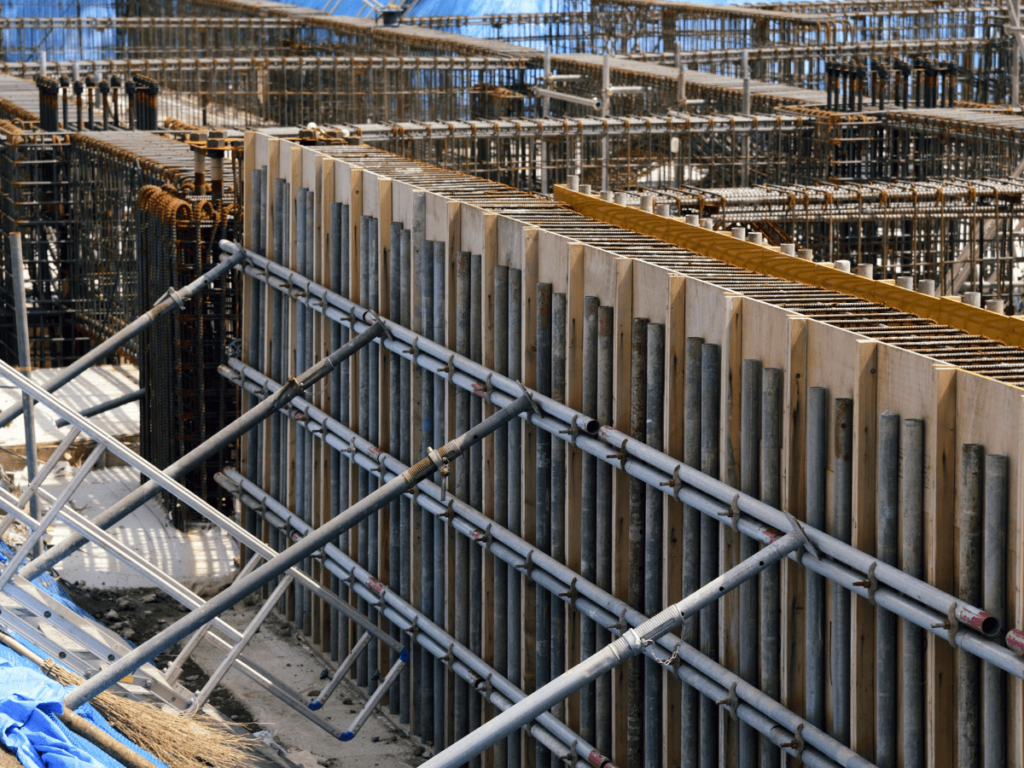
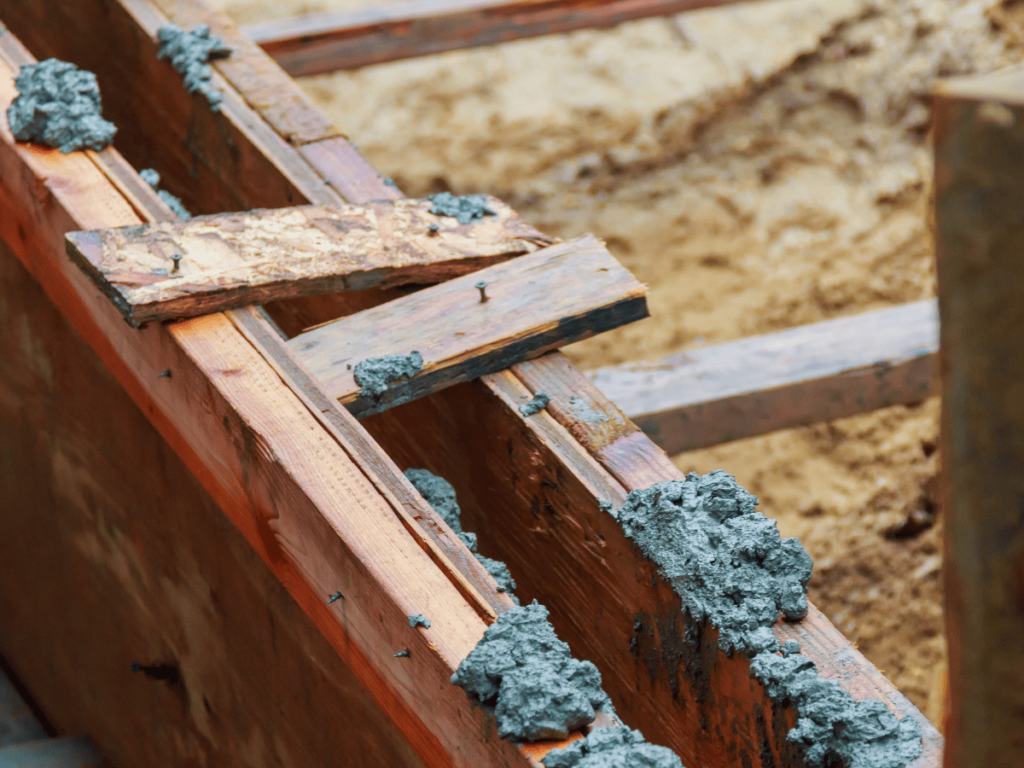
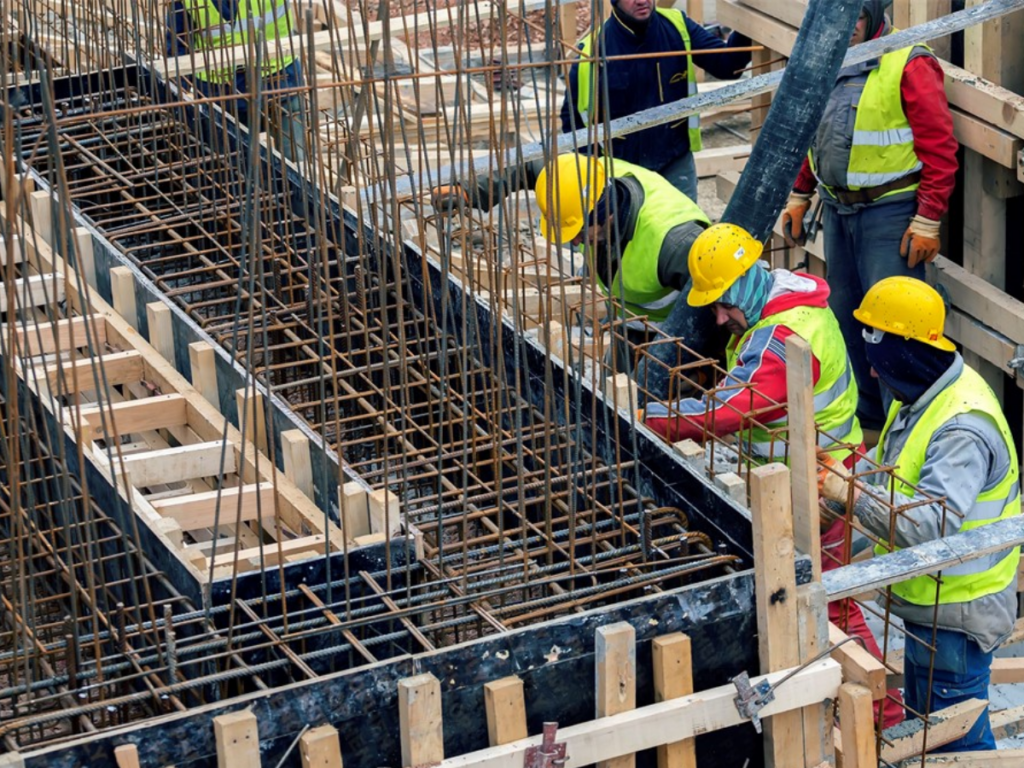
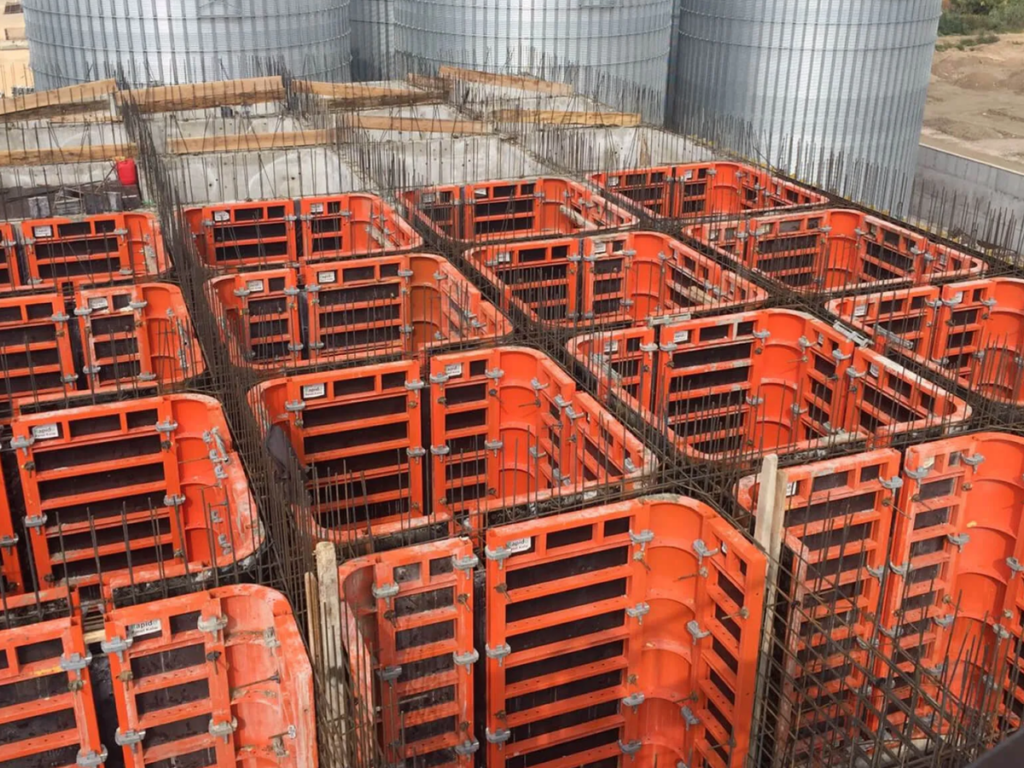
Formwork is a material used as molds to create concrete or reinforced concrete structures
Construction formwork
In addition, construction formwork is often produced from materials that are water-resistant, moisture-resistant and heat-resistant in harsh environments. Depending on the purpose of use, formwork panels will have different thicknesses, suitable for the needs of contractors
Structure of construction formwork
In the current market, it is not difficult to find many different types of formwork boards: red formwork boards, black film faced plywood, brown film faced plywood, long formwork boards… and depending on each type, there will be different purposes of use. However, in general, the structure of formwork in construction is similar
General structure
Construction formwork consists of 3 main parts:
Surface: this is the part that is in direct contact with the concrete surface, playing a decisive role in the shape and structure of the concrete when it hardens
Stiffening ribs: with the role of helping to increase stiffness, this is the main load-bearing part of the mold, they combine with the assembled face board into a shape suitable for each construction layout
Connecting accessories: the main materials used are wooden bars, bolts, nails, screws… to help tightly connect and hold the wood formwork panels together
Use formwork panels to connect
Specifications
In the current market, formwork in construction is produced in many different specifications to meet all customer needs. Common specifications include:
Board width: 150mm, 200mm, 250mm, 300mm, 450mm, 500mm, 550mm, 600mm,… this size is suitable for many types of projects from small to large
Board length: formwork is often used in construction works, so the length of the board is quite large, most commonly from 1000mm to 2440mm. In addition, formwork boards also have lengths up to 3000mm (long formwork), used in works with special requirements on length
Board thickness: Formwork board thickness is diverse, the most common are 12mm, 15mm, 18mm. Of which, 18mm is the most commonly used
Thickness of formwork in construction
Technical standards of construction formwork
To ensure the safety and quality of the project, formwork in construction need to satisfy a number of technical criteria as follows:
Technical standards of formwork
Formwork: must be tight and have no gaps to avoid liquid concrete from flowing out when poured, causing deformation of the concrete structure
Form the mold according to the design of the project, ensuring that the concrete is poured in the right position
The formwork must be able to withstand the force until the wooden formwork is removed from the concrete structure
Popular types of construction formwork
Nowadays, there are many different types of formwork on the market with many distinct characteristics. Including traditional formwork (natural wood, industrial wood, film-coated plywood) and modern formwork (steel, aluminum, plastic)
Natural wood formwork
Natural wood formwork is assembled from forest wooden bars, cut to suitable sizes for shaping concrete into blocks. Suitable for all types of level 4 and low-rise buildings
Natural wood formwork
Film faced plywood
Film faced plywood is a type of concrete forming plywood made from thin wooden panels pressed together, produced according to a strict process with the heat pressing method and using specialized glue. With the advantages of a surface that is anti-adhesive to concrete, waterproof, moisture-proof and can be reused many times, film coated plywod is known as an optimal formwork plywood in construction projects
Film orming plywood
Steel formwork
Steel formwork is made of steel, the shaped frame is very sturdy and can withstand good force. However, this type of formwork is quite heavy, making it difficult to move and install
Steel formwork
Aluminum formwork
Aluminum formwork is made from aluminum alloy, has relatively high durability and adapts well to harsh climate conditions. Often used in high-rise construction projects
Aluminum formwork
Plastic formwork
Plastic formwork is a new generation of formwork, produced in modern production lines. With good anti-adhesion ability, light weight and high durability, plastic formwork is applied in most construction projects
Plastic formwork
Compare the advantages and disadvantages of different types of construction formwork on the market
Nowadays, there are many types of construction formwork, so it is difficult to choose the right type for your needs. To learn more about the advantages and disadvantages of each type of formwork, here is a detailed comparison table
Types
Advantages
Disadvantages
Natural wood formwork
Light, easy to transport and install
Good bearing capacity
Reusable 12-15 times
Easy to cut into different sizes
Consuming natural resources, polluting the environment
Surface quality degrades after repeated reuse
Forming plywood – film faced sheet
Flat surface, good non-stick
Light weight, easy to move and install
Reusable up to 20 times
Good moisture resistance, high durability
Reduce shrinkage, warping, termites
Must have storage
Surface deterioration after repeated use
Steel formwork
Reusable many times (up to 50 times)
Highly regarded for its accuracy
Quality construction, good concrete surface
Various sizes
Heavy, difficult to move and install
High cost
Easy to warp, sticky
It is dangerous if
improper use
Aluminum formwork
Rust – free
Beautiful concrete surface
Fast floor upgrade
Reusable
Complex installation
High cost
The weight is also relatively heavy
Plastic formwork
Light weight, safe to uú
Quick installation and disassembly
Highly reusable
Easy to clean after construction
High initial investment cost
Where to buy quality construction formwork?
Nowadays, construction formwork is gradually becoming popular and trusted by contractors, especially film-coated formwork. With the function of shaping concrete molds for construction works, the birth of formwork has brought many benefits and moreover, it reduces construction time, easy to transport and install
Film faced plywood at Fiber Wood is produced in a Vietnamese factory, with the ability to be reused up to 20 times. Possessing modern machinery, along with a professional production process, we are confident that we will bring top quality construction plywood
Fiber Wood - high quality forming plywood supplier
Above is some information about construction formwork, we hope that this content will help customers make the most suitable formwork choice. Contact Fiber Wood for the most detailed advice on construction film faced plywood!